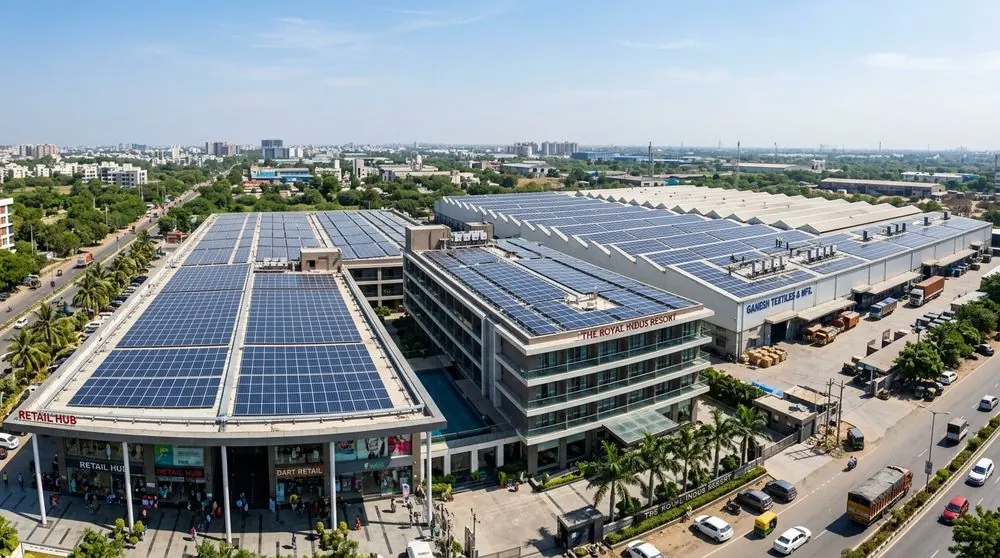
Power is among the major cost considerations for enterprises today. For a retail store, a hotel, a restaurant, a warehouse, or any manufacturing unit, increasing power tariffs may affect business profitability.
While seeking to cut down costs and achieve sustainable energy generation and consumption, commercial solar power generation is among the best investment solutions that businesses have opted for. Solar power enables businesses to produce power, cut dependency on power from the grid and shield against future tariff increases.
Apart from cutting down operational costs, solar panel installation helps businesses achieve their sustainability objectives, improve their reputation and fulfill their environmental obligations. Incentives, subsidies, tax benefits and net metering have made commercial solar projects more financially feasible.
In this blog, Brightleaf Energy will highlight how solar ROI works for businesses, how shops, hotels, and factories stand to benefit, and why commercial solar power generation is a preferred option across India.
Are Solar Panels Worth It for Businesses?
Yes. The commercial solar panel is capable of reducing electricity expenses, increasing profits, and creating savings over a period of time. The return on investment by a commercial company with solar power installation occurs in 3 to 6 years.
Furthermore, businesses can enjoy other benefits including tax credit, net metering, and protection against increasing electricity prices.
Why Businesses Are Switching to Solar Energy
Companies have started using solar energy to reduce costs, make themselves more sustainable, reduce their dependency on electricity from the grid, and create savings in the long term.
Rising Cost of Commercial Electricity
The cost of electricity continues to increase in India. For many companies, the cost of energy makes up a large part of monthly costs. The use of solar energy helps to counteract that.
Increasing Attention to Environmental Factors
Consumers tend to support environmentally friendly companies. The installation of solar energy panels shows that the company cares about environmental issues and reduces its carbon footprint.
Energy Independence
With the use of solar panels, companies can produce electricity themselves and avoid dependency on energy providers. That way, companies avoid possible increases in tariff rates and blackouts.
Positive Brand Image
Use of renewable sources of energy improves brand image and helps implement ESG principles.
What Is Solar ROI for Businesses?
Solar Return on Investment (ROI) is the profit that a company makes from its investments in electricity savings due to the installation and maintenance of the solar system.
Metrics That Companies Need to Consider While Installing Solar Energy
What Is the Acceptable Solar ROI?
Commercial solar projects usually have good returns since companies use a lot of electricity during the daytime.
| Business Type | Typical Payback Period |
|---|---|
| Small Shops | 3-4 Years |
| Hotels | 4-6 Years |
| Factories | 3-5 Years |
After the payback period, businesses continue generating electricity and savings for decades.
How Commercial Solar Systems Work
The commercial solar power system makes use of the sun to generate electrical power, and this is done with the help of solar panels and inverters. The electricity that is generated is used to run the business operations, while the extra electricity is exported into the grid through the net metering process.
Components of Commercial Solar System
- • Solar Panels
- • Solar Inverters
- • Mounting Equipment
- • Monitoring System
- • Battery Backup (optional)
Grid-Tied vs Hybrid System
Grid-Tied: Cheaper installation costs, suitable for any business, net metering enabled.
Hybrid System: Contains battery backup, more energy independence, ideal for critical business operations.
Net metering allows businesses to send excess electricity back to the grid and receive bill credits, improving overall solar ROI.
Solar ROI for Retail Shops
Yes. Retail stores can save significantly in electricity costs and improve their bottom lines using solar power.
Electricity Usage Pattern in a Retail Store
Some of the main uses of electricity in retail stores include:
A store that spends ₹25,000 in electricity charges can expect savings of 60-80%.
Recommended Solar Capacity
| Shop Type | Suggested System |
|---|---|
| Small Shop | 3-5 kW |
| Medium Store | 5-15 kW |
| Shopping Complex | 20+ kW |
Example ROI Calculation for Shop
- • Monthly Bill: ₹25,000
- • Solar Cost: ₹6,00,000
- • Annual Savings: ₹2–2.5 Lakh
- • Payback Period: 3–4 Years
Benefits for Shop Owners
Solar ROI for Hotels and Hospitality Businesses
Hotels make good use of solar ROI since they have energy-intensive systems running all through the day.
Why Hotels Use More Electricity
Hotels consume electricity for:
Many operations in hotels can be powered using solar energy, particularly during the daytime.
Recommended Solar Capacity for Hotels
| Hotel Type | Suggested System |
|---|---|
| Small Hotel | 20-50 kW |
| Boutique Hotel | 50-100 kW |
| Resort | 100+ kW |
Return on Investment Example for Hotel
- • Monthly Bill for Electricity: ₹1,50,000
- • Cost of Solar Installation: ₹25,00,000
- • Saving per Year: ₹12 to 15 Lakh
- • Payback Period: 4 to 5 Years
Sustainability Benefits: Solar energy can help hotels become more sustainable, attract environmentally-conscious tourists, and gain an edge in terms of environmental friendliness.
Solar ROI for Factories and Manufacturing Units
Solar energy can be very rewarding for factories since they have big roofs, lots of daytime usage, and high electricity bills.
Why Factories Profit the Most
Saving Potential: Solar will be able to bring down the costs incurred for energy used in production processes and hence increase profitability.
Best-Suited Industries
Factory ROI Example
- • Monthly Electricity Bill: ₹5,00,000
- • Solar Project Cost: ₹60,00,000
- • Annual Savings: ₹40–50 Lakh
- • Payback Period: 3–5 Years
Captive Solar vs PPA Comparison
| Factor | Captive Solar | PPA |
|---|---|---|
| Ownership | Business | Third party |
| Upfront Cost | Higher | Lower |
| Long-term ROI | Higher | Moderate |
| Control | Full | Limited |
Industrial Solar Benefits
Factors That Affect Commercial Solar ROI
Solar ROI depends on location, electricity rates, roof space, equipment quality, maintenance, financing structure, and available incentives.
What Improves ROI?
- • Higher electricity tariffs
- • Better solar exposure
- • Net metering
- • High-efficiency panels
What Reduces ROI?
- • Shading
- • Poor installation
- • Low-quality equipment
- • Excessive maintenance costs
Government Incentives and Tax Benefits for Commercial Solar
Yes. There is potential for accelerated depreciation, net metering advantages, and numerous state-based renewable energy incentives.
Section 32(1)(iia) of the Income Tax Act allows a business to claim 40% depreciation on the written-down value of a new solar plant in the first year of operation, which helps lower taxable income and shorten the effective payback period.
These advantages lead to increased profits and decreased payback periods.
Solar Financing Options for Businesses
Choosing the best way to finance will depend on cash flow, ownership, and business objectives.
Businesses that want maximum return will prefer owning whereas the ones that want minimum upfront investments will choose PPAs.
Cost Breakdown of Commercial Solar Installation
The prices for commercial solar energy will depend on the size of the system, type of technology used, and installation complexity.
It is recommended to take into account warranties and maintenance needs during the comparison of quotes.
Common Myths About Commercial Solar ROI
| Myth | Reality |
|---|---|
| Solar is too expensive. | Payback occurs within three to six years. |
| Solar does not work during cloudy weather. | Systems still generate power in low sunlight. |
| Maintenance costs are high. | Solar requires minimal maintenance. |
| ROI takes decades. | Many projects recover cost within a few years. |
| Factories cannot run on solar | Many industrial facilities offset a large portion of electricity usage. |
How to Calculate Solar Savings for Your Business
Businesses calculate ROI by comparing annual electricity savings against solar installation costs and determining the payback period.
- Review electricity bills
- Assess roof space
- Determine system size
- Estimate energy generation
- Calculate annual savings
- Determine payback period
Avoid common mistakes such as underestimating energy usage or selecting an incorrectly sized system.
Choosing the Right Commercial Solar Installation Company
Consider experience, certifications, warranties, installation, and service after sale.
Do not consider vendors that provide unrealistic pricing without project requirements.
Future of Commercial Solar Energy
The commercial solar industry will see improvements with the use of AI-based tracking, advancements in energy management, battery storage improvements, electric vehicle charging, and virtual power plants.
Organizations using these technologies can achieve higher efficiencies and increased returns on investment from solar systems.
Frequently Asked Questions (FAQ)
1What is the average ROI on installing solar panels for a business?
Commercial solar panel installations typically have a payback period of 3-6 years, with continued savings for more than 25 years thereafter.
2Are solar panels good for small retail businesses?
Absolutely. Businesses will be able to cut costs substantially and improve bottom lines.
3Are hotels able to operate entirely on solar power?
Hotels are able to generate enough solar power to make up a large part of their power needs, even if they do remain connected to the grid.
4How much solar power is needed for a factory?
Start with the monthly units shown on your electricity bill, then apply a simple sizing rule: recommended kW ≈ monthly units consumed ÷ 120–130 units per kW per month (the typical solar yield per kW in Delhi NCR). For example, using the factory example above — a facility with a monthly bill of ₹5,00,000, which at a commercial tariff of roughly ₹10/unit implies about 50,000 units a month — the recommendation works out to approximately 385–415 kW (50,000 ÷ 130 to 50,000 ÷ 120). Your exact requirement also depends on operating hours, load profile, and roof space, so get a professional load study for an accurate figure.
5Does a business receive tax benefits from installing solar?
Yes. There are many tax benefits available for commercial solar installations.
6How often do I need to perform maintenance on my solar panels?
Solar systems need very little maintenance; only cleaning and inspections periodically.
7What if I produce too much electricity from my system?
Too much electricity produced can easily be exported to the grid by participating in the net metering program.
8Can my commercial solar project be financed?
Yes. Different financing options such as loans, PPAs, and lease contracts are available to businesses.
9How many years will my commercial solar panels serve me?
Modern solar panels can serve up to 25 years or even more.
Conclusion & Key Takeaways
Today commercial solar energy is not just about being environmentally friendly; it is about making smart investments.
For Shops
- • Lower operational costs
- • Increased profitability
- • Faster payback period
For Hotels
- • Reduced energy expenses
- • Good sustainability
- • Positive green image
For Factories
- • High long term savings
- • Low production costs
- • Higher competitiveness
Key Takeaways
- • Solar energy greatly decreases electricity expenses for your business.
- • Almost all commercial solar installations pay back within 3-6 years.
- • Government incentives help to be more profitable.
- • Solar energy saves money throughout many years.
Ready to Explore Solar for Your Business?
Get a professional solar assessment, calculate your business's potential ROI, and request a customized solar proposal today.
Sources & Official References
- Ministry of New and Renewable Energy (MNRE) – rooftop solar & net metering policy
- Indian Renewable Energy Development Agency (IREDA) – financing & incentives for commercial solar
Subsidy amounts, tariffs, and scheme details are subject to change and site/DISCOM approval. Verify against the official portals above before relying on any figure.