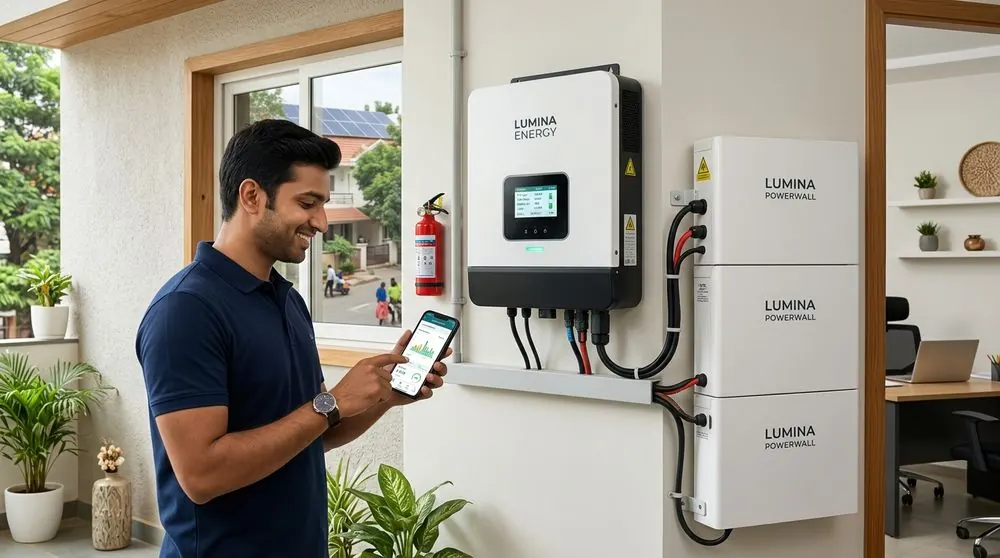
The performance of the entire solar power system largely depends on the performance of the solar inverter. Solar panels will produce the energy, but it is the inverter which transforms that DC energy into usable AC electrical power to operate your home and office premises safely. Without an efficient solar inverter, your solar system cannot perform effectively.
Currently, solar inverters come in varying costs depending on several aspects including system capacity, conversion efficiency, intelligent features, and manufacturer reputation. Irrespective of whether you intend to install a domestic or a commercial solar system, choosing the appropriate inverter directly influences lifetime system performance and financial return on investment.
Modern solar inverters are endowed with advanced features including electrical safety protections, battery backup compatibility, and Wi-Fi mobile monitoring. While high-end models carry higher upfront costs, they provide superior long-term energy yield and reliability compared to low-quality inverters.
This article provides a comprehensive guide on various solar inverters available in India, their costs, factors determining inverter prices, and step-by-step guidance to select the best solar inverter for your needs.
How Much Does a Solar Inverter Cost?
Prices for solar inverters depend on system capacity, inverter type, technology, and brand reputation. Grid-tied inverters tend to be significantly cheaper than hybrid and battery-ready inverters since the latter incorporate advanced energy management circuits.
The perfect solar inverter doesn't necessarily have to be the cheapest—it must align with your exact load requirements and grid stability.
What Is a Solar Inverter and Why Is It Important?
The inverter serves as the mechanism that transforms the Direct Current (DC) electricity generated by rooftop solar panels into Alternating Current (AC) electricity required by standard household appliances, office computers, and industrial machinery.
- Solar panels capture sunlight and generate DC electricity.
- DC electricity flows through DC cables to the solar inverter.
- Inverter converts DC power into 230V/415V AC electricity.
- AC power supplies electricity to your building appliances.
- Surplus generated power is exported back to the utility grid via net metering.
Why Every Solar System Needs an Inverter
Types of Solar Inverters Available Today
On-Grid Inverters (Grid-Tied)
Economical solution for grid-connected urban homes and commercial buildings. Supports net metering bill credits.
Off-Grid Inverters
Designed for remote areas without grid access. Operates with battery storage to supply standalone power.
Hybrid Inverters
Combines grid connectivity with battery storage. Powers home during grid power outages.
Microinverters
Installed behind individual solar panels. Optimizes panel-level performance on complex or shaded roofs.
String Inverters (Most Common)
Connects strings of solar panels together. Standard choice for residential & commercial rooftop systems.
Advantages of Modern Solar Inverters
Today's solar inverters provide much more than basic energy conversion:
Factors That Affect Solar Inverter Prices
Higher kW capacities require larger transformers and power electronics, increasing costs proportionally.
On-grid string inverters are cheapest, off-grid models moderate, and hybrid inverters command premium pricing.
Tier-1 global and top Indian brands offer better build quality, service networks, and lower failure rates.
Inverters with >98% CEC efficiency and 10-year warranties carry higher upfront costs but yield higher lifetime energy.
Solar Inverter Price Range by Type
| Inverter Type | Best For | Typical Price Range |
|---|---|---|
| On-Grid Inverter | Homes & Small Businesses | ₹18,000 – ₹80,000 |
| Off-Grid Inverter | Remote Areas & Battery Systems | ₹25,000 – ₹1,20,000 |
| Hybrid Inverter | Backup Power + Grid Connectivity | ₹45,000 – ₹2,50,000+ |
| Micro Inverter | Shaded Roofs & Panel Optimization | ₹8,000 – ₹15,000 per panel |
| String Inverter | Most Residential & Commercial Rooftops | ₹20,000 – ₹2,00,000+ |
Prices shown are indicative market ranges for Delhi NCR as of 2026 and vary by brand, capacity, and dealer. Request a live quote for current pricing. Wherever possible, choose certified, ALMM-compliant inverters from Tier-1 brands — including major Indian and global manufacturers — which offer better build quality, service networks, and warranty support.
Top Solar Inverters for Households
Evaluating residential solar inverters requires looking beyond initial purchase price. Key selection parameters include conversion efficiency (95–98%), mobile app monitoring, warranty terms, safety features, and battery compatibility.
On-grid string inverters are ideal for lower power needs and city net metering.
High-efficiency string or hybrid inverters with dual MPPT and surge protection.
High-capacity multi-MPPT inverters to handle ACs, pumps, and heavy loads.
Residential Inverter Buying Checklist:
- Is it compatible with panel kW capacity?
- Includes Wi-Fi mobile monitoring app?
- Minimum 5-to-10 year warranty?
- Allows future battery storage expansion?
Top Solar Inverters for Businesses
Commercial solar systems require scalable, industrial-grade inverters with intelligent monitoring capable of reliable continuous operation.
Compact grid-tied inverters for daytime lighting and HVAC load offset.
High-efficiency string inverters with remote energy management monitoring.
Hybrid or high-capacity string inverters providing continuous heavy load support.
Industrial multi-MPPT 50kW+ inverters engineered for harsh operating environments.
Cost Comparison of Solar Inverter by Capacity
Inverter Size Selection Errors That You Should Avoid
Best Solar Inverter Brands in the Market
Rather than evaluating inverter brands purely on price, compare build quality, certifications, warranty length, and local service center availability.
High efficiency, 5-10 year warranty, mobile Wi-Fi app, battery compatibility, and local service support.
Industrial reliability, multi-MPPT support, high-voltage grid interaction, and long warranty terms.
On-Grid vs Off-Grid vs Hybrid Inverters Comparison
| Feature | On-Grid Inverter | Off-Grid Inverter | Hybrid Inverter |
|---|---|---|---|
| How it works | Converts solar DC to AC grid electricity. Exports excess power via net metering. | Operates independently of grid with battery storage. | Combines Grid Connectivity with Battery Storage for maximum flexibility. |
| Best for | Urban homes, offices, retail shops & commercial sites with reliable grid | Rural homes, farms & remote off-grid locations | Homes & businesses with frequent power cuts wanting battery backup |
| Battery Support | Not required | Required | Optional / Supported |
| Net Metering | Yes | No | Yes |
| Power Backup During Outages | No | Yes | Yes |
| Initial Cost | Lowest | Moderate | High |
| Key Advantages | Lower cost, higher ROI, supports net metering, low maintenance | Complete energy independence, reliable backup | Uninterrupted power, battery backup, future expansion support |
| Main Limitation | Shuts down during grid outages for safety | Higher cost due to battery replacement cycles | Higher initial investment cost |
How to Choose the Right Solar Inverter
- Assess your monthly energy consumption.
- Determine solar panel array capacity (kW).
- Select inverter type (On-Grid vs Hybrid).
- Compare efficiency ratings (>97%).
- Review manufacturer warranty terms.
- Evaluate Wi-Fi app features & support.
Future Trends in Solar Inverter Technology
Solar inverters are evolving into intelligent energy management hubs:
AI algorithms detect fault anomalies before performance degrades.
Direct EV charging from rooftop solar via smart inverter integration.
Intelligent export management and battery optimization for peak rates.
Frequently Asked Questions (FAQ)
1How much does a solar inverter cost?
Solar inverter prices vary depending on capacity and type. Residential models typically range from ₹18,000 to ₹80,000, while larger commercial and hybrid inverters can cost significantly more.
2Which solar inverter is best for home use?
The best inverter depends on your electricity usage, rooftop size, and whether you need battery backup. On-grid inverters suit most homes, while hybrid models are ideal for backup power.
3What is the difference between on-grid and hybrid inverters?
An on-grid inverter works with the electricity grid, whereas a hybrid inverter also supports battery storage for backup during power outages.
4How long do solar inverters last?
Most quality solar inverters have an average lifespan of 10–15 years, while microinverters can last 20–25 years.
5Which inverter brand is the most reliable?
Several leading manufacturers offer reliable solar inverters. Compare efficiency, warranty, after-sales support, and compatibility before making a decision.
6Can I upgrade my inverter later?
Yes. Many homeowners upgrade their inverter when expanding their solar system or adding battery storage.
7Do solar inverters require maintenance?
Yes, but maintenance requirements are minimal. Routine inspections and cleaning help ensure efficient operation.
8What size solar inverter do I need?
The right inverter size depends on your solar panel capacity and daily electricity consumption. A professional installer can recommend the ideal size.
9Are hybrid solar inverters worth the extra cost?
Hybrid inverters are worth considering if you want battery backup, greater energy independence, or plan to add batteries in the future.
10How can I reduce solar inverter installation costs?
Choose the correct inverter size, compare quotations from reputable installers, and ensure all installation costs are clearly included in the proposal.
Conclusion & Key Takeaways
A solar inverter is the heart of every solar power system, transforming DC solar power into usable AC electricity. Choosing the right inverter improves system efficiency, increases energy savings, and ensures reliable performance for decades.
For Homeowners
- • Prioritize efficiency and reliability
- • Consider battery compatibility
- • Match inverter to household load
For Businesses
- • Choose scalable high-capacity models
- • Invest in smart Wi-Fi monitoring
- • Focus on long-term ROI
For Large Projects
- • Industrial-grade multi-MPPT inverters
- • High system uptime focus
- • Centralized monitoring
Ready to Choose the Right Solar Inverter?
Get expert guidance on inverter selection and receive a customized solar proposal for your home or business.
Sources & Official References
- Ministry of New and Renewable Energy (MNRE) – solar policy & quality standards
- MNRE ALMM List – Approved List of Models and Manufacturers (models & manufacturers)
Subsidy amounts, tariffs, and scheme details are subject to change and site/DISCOM approval. Verify against the official portals above before relying on any figure.